Graphic design services: what to look for and how to choose

TABLE OF CONTENTS
TL;DR
Six service models cover the graphic design market: freelance, marketplaces, agencies, in-house, unlimited subscriptions, and AI tools. Match the model to your volume, budget, and consistency needs first. Then pick a vendor inside it using eight criteria: portfolio relevance, scope match, turnaround, revisions, communication, file ownership, pricing model, and red flags.
{{GRAPHIC_BANNER="/dev/components"}}
Most articles titled "graphic design services" are vendor catalogs dressed up as guides. They assume you've already picked the type of service you want and just need a name. That's not how real buyers shop.
The harder question, the one nobody answers well, is what type of service makes sense for your situation in the first place. A solo founder buying a logo has nothing in common with a marketing team pushing out 30 assets a month. The right service for one is wrong for the other.
This is a buyer's guide. Six service models, what each one is good for, what to look for inside each one, and how to spot the red flags before you commit. ManyPixels sits in the unlimited subscription category, and we'll be honest about where that fits and where it doesn't.
What are graphic design services?
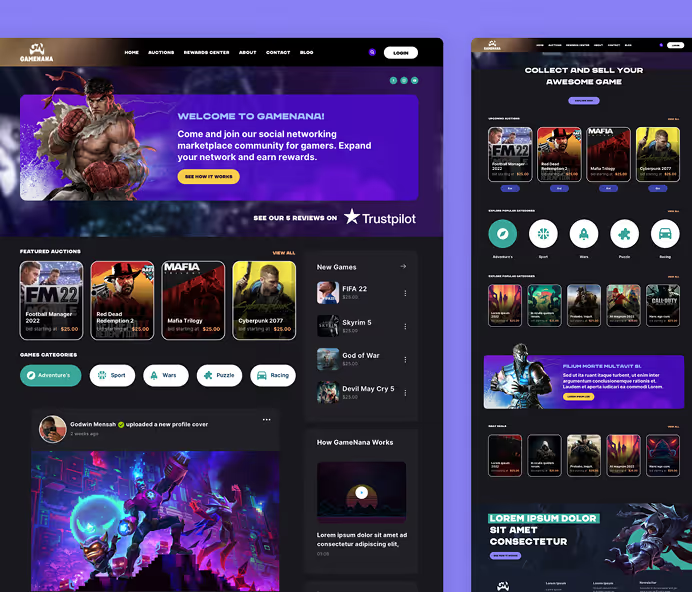
Graphic design services are paid creative work that produces visual assets for brands and businesses. The category covers seven main areas of work:
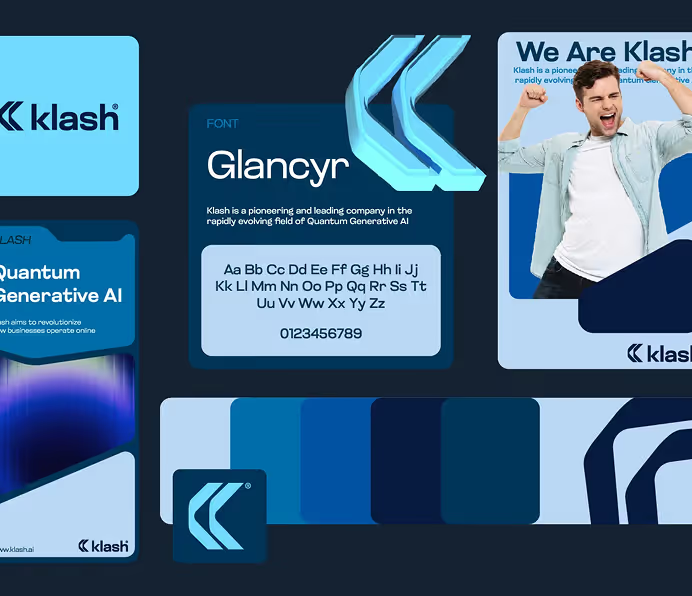
• Brand identity design (logos, color palettes, brand guidelines)
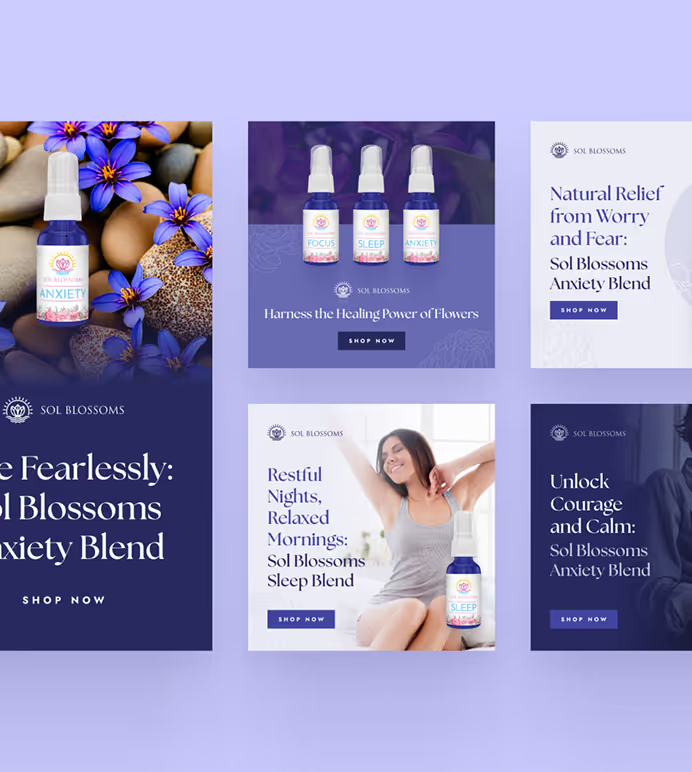
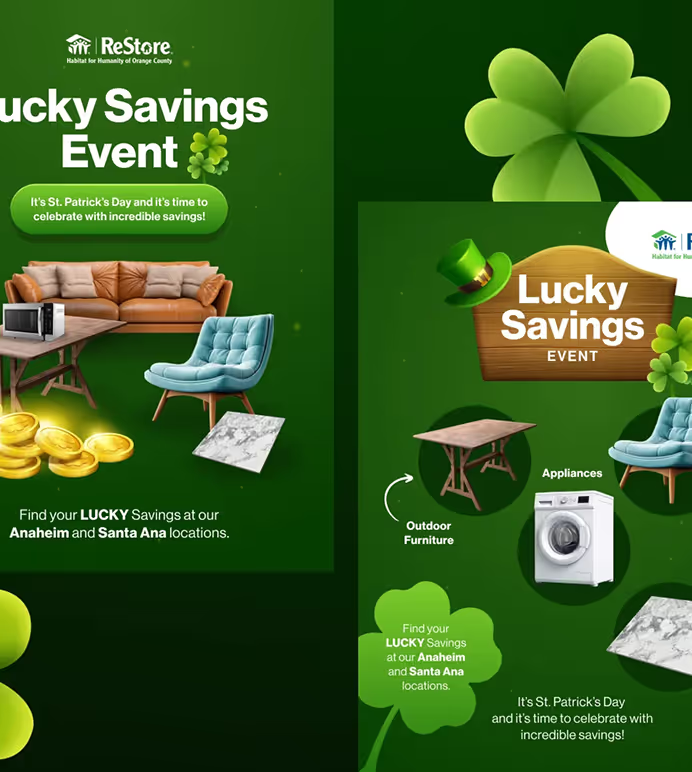
• Marketing and advertising design (social posts, display ads, email graphics)
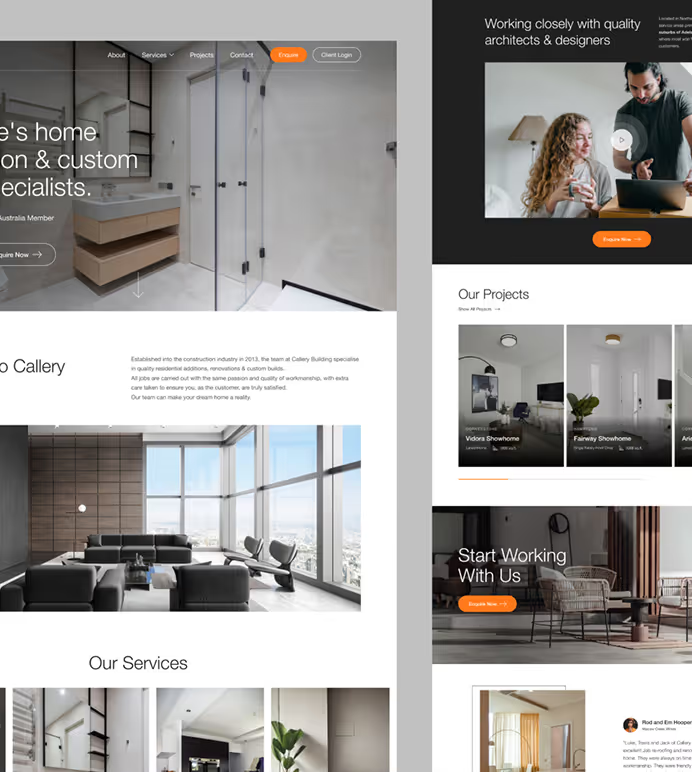
• Web and UI design (landing pages, app interfaces, wireframes)
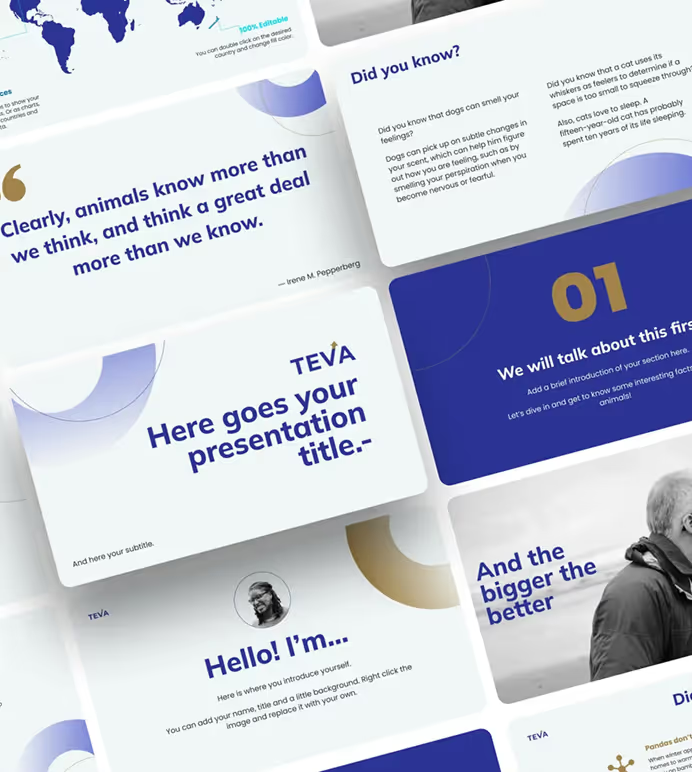
• Print collateral (business cards, brochures, posters)
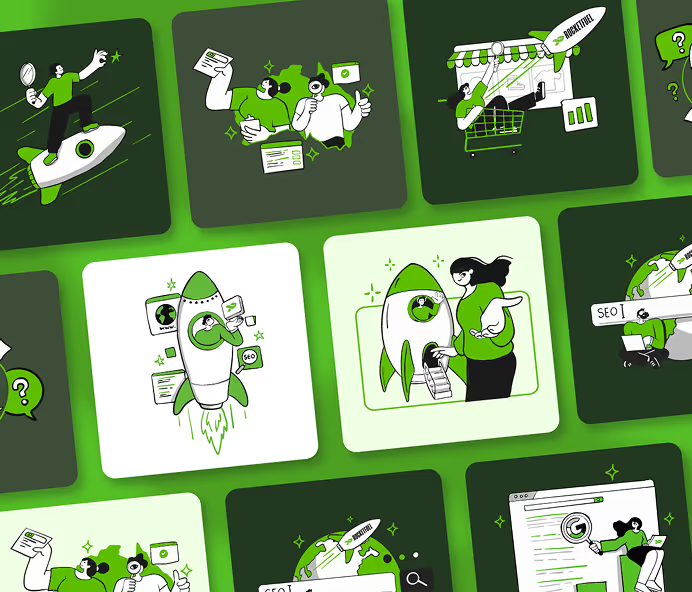
• Illustration (custom art, icon sets, infographics)
• Motion graphics (logo animations, GIFs, video editing)
• Packaging design (product labels, boxes, retail materials)
Most services don't cover all seven equally. Brand agencies excel at identity but won't churn out social posts every week. Marketplaces are great for one-off contests but break down on long-running marketing programs. Knowing which areas you'll actually use narrows the field fast.
Most businesses fall into one of two patterns. Either they need a one-time deliverable (a logo, a website mock, a pitch deck) and then stop, or they need a steady flow of marketing assets every week. The two patterns call for different service models. Confusing them is the main reason buyers end up with a service that costs more than expected and delivers less than they need.
The six ways to get graphic design done in 2026
Six distinct delivery models dominate the market in 2026. Here's how they compare at a glance.
• Freelance designers: $25 to $150 per hour. Days to weeks turnaround. Variable consistency. Best for one-off projects.
• Design marketplaces: $5 to $1,500 per project. Days to weeks. Low consistency. Best for logo contests and single deliverables.
• Design agencies: $5,000 to $50,000+ per project. Weeks to months. High consistency. Best for branding and complex campaigns.
• In-house designers: $61,300 median salary plus benefits. Same day to days. Highest consistency. Best for steady high volume.
• Unlimited subscriptions: $499 to $5,000+ per month. 24-48 hour first drafts. High consistency. Best for marketing teams scaling content.
• AI design tools: $10 to $30 per month. Minutes. Variable consistency. Best for drafts and simple assets.
1. Freelance designers
Freelance designers cover everything from $5 logo sellers on Fiverr to $150-an-hour senior creatives. The model works well for one-off projects with a clear scope: a logo, a pitch deck, a single landing page. Where it breaks down is volume and consistency. Different freelancers have different styles, availability gets unpredictable, and managing a roster turns into a part-time job. For a deeper look, see our breakdown of unlimited design subscriptions vs hiring a freelancer at manypixels.co/blog/get-a-designer/unlimited-design-vs-freelancer.
2. Design marketplaces (Fiverr, 99designs, DesignCrowd)
Marketplaces sit between freelancers and full agencies. You either browse listings (Fiverr) or run a contest where multiple designers submit concepts and you pick a winner (99designs, DesignCrowd). The big upside is breadth and price. The downside is quality variance and contest fatigue. By submission 30, you're tired and the picks blur together. Marketplaces work best for single, well-scoped deliverables like a logo or business card set. They struggle with anything that requires brand continuity over time.
3. Design agencies
Agencies are the right call when the work is strategic, not just tactical. A brand identity rebuild, a flagship campaign, packaging across 20 SKUs. You're paying for senior creative direction and a project-managed team. Per Clutch's 2026 design industry report, agencies most commonly charge between $25 and $149 per hour, with logo and branding work running $35 to $90 per hour and full agency engagements landing between $5,000 and $50,000+ per project.
Retainers run higher. Agencies don't move fast. For ongoing marketing volume, they're almost always overkill. Our agency vs freelancer vs subscription comparison goes deeper on when an agency is worth it:
4. In-house designers
Hiring a full-time designer makes sense when you have predictable, high-volume needs and want maximum control. The Bureau of Labor Statistics reports a median annual wage of $61,300 for US graphic designers (May 2024 data, the most recent published). Senior designers and creative leads reach $80,000 to $95,000+. Add roughly 30% in benefits and overhead, plus software licenses and management time, and a single in-house hire runs $80,000 to $125,000+ a year fully loaded.
The math works at scale and stops working below it. One designer can typically produce 6 to 12 deliverables a week before quality slides. Beyond that, you need a second hire or a different model. We've covered the tradeoffs of in-house, freelance, and subscription in detail here.
5. Unlimited design subscriptions
Subscription services charge a flat monthly fee for a steady flow of design work. You submit requests into a queue, the team works through them on a daily output basis (typically 24-48 hour first drafts), and revisions are unlimited. Pricing ranges from around $499 a month at the entry tier to $5,000+ at the enterprise level. The model fits marketing teams and agencies that need consistent throughput across multiple asset types. For a full vendor breakdown, see our list of the best unlimited graphic design companies.
6. AI design tools
Canva AI, Adobe Firefly, Midjourney, and a growing list of others can produce design work in minutes for $10 to $30 a month. Adoption is moving fast: per Salesforce's State of Marketing 2026 report, 87% of marketing teams now use generative AI in at least one recurring workflow, up from 51% in early 2024.
The technology is genuinely useful for first drafts, social post variations, internal documents, and quick image generation. It is not a replacement for a designer when you need brand consistency, custom illustration, or anything that requires creative judgment. Treat AI as an accelerator inside whatever model you pick, not a model on its own.
How much do graphic design services cost in 2026?
The honest answer is: it depends on what you're buying and how often you're buying it. Here are the 2026 ranges that hold up across the market.
For context on overall design spend, Clutch's 2026 industry report found that 54% of businesses now invest between $1,000 and $15,000 annually in outsourced graphic design, and 47% are increasing their design budgets year over year. Most of that growth is moving toward subscription and on-demand models as marketing teams scale content.
Freelance designers charge $25 to $150 per hour, with most landing between $50 and $95 outside of marketplaces. On Upwork specifically, the median hourly rate for graphic designers is closer to $25, with most listings between $15 and $35, per Upwork's published cost data. Adobe's research on freelancer rates puts the average for experienced general designers at $49.65 per hour and web specialists at $59.40. Fixed-fee logo projects run $300 to $5,000 across the market. A senior brand designer with a strong portfolio is closer to $5,000 to $15,000 for a full identity package.
Design marketplaces start cheap. Fiverr gigs begin at $5 and most decent work falls in the $50 to $500 range. Contest sites like 99designs run $299 for a basic logo contest up to $1,500 for full brand packages. Bulk buying drops the per-asset cost, but quality is contest-dependent.
Design agencies are project-based. A brand identity from a respected boutique agency runs $5,000 to $25,000. Full rebrand projects from larger agencies land between $25,000 and $250,000+. Monthly retainers for creative direction typically start around $10,000.
Hiring an in-house designer costs around $61,300 in median salary, per the Bureau of Labor Statistics. Senior designers reach $80,000 to $95,000+. Add roughly 30% in benefits and overhead, and full loaded cost runs $80,000 to $125,000 a year per designer. Add software licenses, training, and management overhead on top.
Unlimited design subscriptions range from $499 to $5,000+ monthly. A few benchmarks for context: Penji starts around $995, Design Pickle runs around $1,349 (its model is hour-based since 2025), Superside starts near $5,000. ManyPixels' tiers run from $699 (Advanced) to $2,599 (Design Team).
AI design tools are the cheapest line item at $10 to $30 a month for individual plans. Enterprise plans can run higher, but rarely above $200 a month. The cost moves to humans only when you need oversight, refinement, or custom work the tool can't produce.
👉 Bottom line on cost: the cheapest cost-per-asset in most cases is either AI tools (for simple drafts) or unlimited subscriptions (for high volume). The most expensive cost-per-asset is freelance and agency project work, especially below 5 deliverables a month.
What to look for in a graphic design service
Once you've picked a service model, the next layer is evaluating specific vendors inside it. These eight criteria apply across all six categories. Working through them before signing up will save you the most common mistakes.
1. Portfolio relevance, not just talent
A glossy portfolio doesn't help if it has nothing to do with your industry or asset type. A designer who's brilliant at fashion lookbooks may produce mediocre B2B SaaS landing pages. When evaluating, ignore the highlight reel and look for work in your specific category. If their portfolio is entirely consumer brands and you're B2B, ask for relevant samples or move on. The strongest signal is portfolio work in your industry within the last 12 months.
{{GENERAL_PORTFOLIO="/dev/components"}}
2. Scope match
Read the scope page carefully. Many services advertise "all design" but quietly exclude the work you actually need. Common gaps to check: motion graphics, video editing, custom illustration, packaging, complex pitch decks, and web/UI work. If the service caps any of these or routes them to a different (more expensive) tier, you'll find out the hard way. Match the service's actual scope to your top 5 asset types before committing.
3. Turnaround speed and SLA
"Fast turnaround" is meaningless without a definition. Ask three specific questions: how fast is the first draft, how fast is each revision round, and how does the queue handle multiple simultaneous requests? Most subscription services deliver 24-48 hour first drafts on simple work, longer on complex projects. Freelancers vary wildly. Agencies usually run weeks. Get the SLA in writing.
4. Revision policy
"Unlimited revisions" sounds great until you realize the queue resets to the back every time you submit one. The right questions: are revisions truly unlimited, do they bump the request back to the top of the queue, and what happens when you and the designer disagree on a major direction change? Some services cap revisions at 3 to 5 rounds. Check before you commit.
5. Communication style and channels
Async communication (ticketing, comments inside a platform) works well for steady work. Real-time (Slack, video calls) works better for time-sensitive launches and creative direction. Pick a service whose communication style matches yours. Beth Shepherd, Marketing Manager at Virtual Service Operations, summarized why it matters: "It never feels like we're waiting on creative support. They feel like an extension of our internal team." That's the bar.
6. File ownership and source files
You should own everything the service produces, in editable native formats. That means full IP transfer on delivery and access to source files (Adobe Illustrator, Photoshop, Figma, Sketch). Some services hold source files behind higher tiers or restrictive license terms. Read the contract. If a service won't transfer 100% of creative rights or won't deliver editable files, don't sign up.
7. Pricing model fit
Hourly billing rewards slow work. Project-based pricing rewards scope creep on the buyer's side. Subscription pricing rewards consistent volume. Match the pricing model to how you'll actually use the service. A team that submits two requests a year shouldn't pay a monthly subscription. A team that submits 20 requests a month shouldn't pay project fees on each one.
8. Red flags
A short list of patterns that should make you pause:
• Pricing is hidden until a sales call
• "Unlimited" without a clear definition of how the queue works
• Portfolio is all stock-style mockups, no real client work
• No information about who will actually do the design
• No clear cancellation or pause policy
• Source files locked behind premium tiers
• Reviews are exclusively 5-star with no specific detail
Any one of these is a yellow flag. Two or more is a hard pass.
Quick buyer profile shortcut:
• Solo founder buying one logo: AI tools or a vetted freelancer
• Bootstrapped small business with monthly needs: small subscription tier or one steady freelancer
• Marketing team scaling content: unlimited subscription
• Agency serving multiple clients: unlimited subscription with brand profiles
• Enterprise launching a brand: premium agency or senior freelancer
Frequently asked questions
What is the average cost of a graphic designer in 2026?
US graphic designers earn a median salary of $61,300 per year, per the Bureau of Labor Statistics (May 2024 data, the most recent published). Senior designers and creative leads reach $80,000 to $95,000+. Freelancers charge $25 to $150 per hour. On Upwork specifically, the median is around $25 per hour. Project-based costs vary widely: a logo runs $300 to $5,000, a full brand identity $5,000 to $25,000.
Is $500 too much for a logo design?
For a small business or solo founder, $500 is a reasonable middle-of-market price. Below $300 you're typically buying a template. Above $1,500 you're paying for senior brand strategy alongside the deliverable. The right price depends on whether you need just the mark or a full identity system around it.
What's the difference between a graphic design service and a graphic designer?
A graphic designer is one person. A graphic design service is the delivery model wrapped around one or more designers: a freelance contract, a marketplace listing, an agency engagement, an in-house role, or a subscription. The work product is similar. The structure, pricing, and consistency around it are very different.
Can AI replace graphic design services?
For first drafts, simple social posts, internal documents, and quick variations, AI tools like Canva AI, Adobe Firefly, and Midjourney are genuinely useful. Adoption has accelerated fast: 87% of marketing teams now use generative AI in at least one recurring workflow, per Salesforce's 2026 State of Marketing report. For brand identity, custom illustration, web and UI design, and anything that requires creative judgment or consistency over time, AI is an accelerator inside a designer-led workflow, not a replacement for it.
How fast should a graphic design service deliver work?
For simple assets (social graphics, banner ads, basic email designs), expect a first draft in 24 to 48 hours from a subscription service or fast freelancer. Complex work (full landing pages, multi-page documents, custom illustration) takes 3 to 7 business days. Brand identity projects from agencies run 4 to 12 weeks. Anything outside these ranges should come with a clear explanation.
Should small businesses use freelancers or subscriptions?
Small businesses with one or two design requests a quarter are better off with a freelancer. Small businesses pushing out content weekly (social posts, ads, email graphics) usually save money on a subscription. The break-even point is around 6 to 8 requests a month.
Bottom line
The graphic design services market is fragmented for a good reason. Different buyers need different models. Pick the model that matches your volume and budget first, then evaluate vendors inside that model using the eight criteria above.
Marketing teams scaling content output are the clearest fit for unlimited subscriptions like ManyPixels, where 150,000+ projects since 2018 have built the playbook for that buyer. Solo founders, agencies, and enterprises each have a different right answer. Don't take a vendor catalog at face value as a buyer's guide.
Got questions about whether a design subscription is the right fit for how you work? Book a free 1:1 consultation to discuss your business needs with us!

Having lived and studied in London and Berlin, I'm back in native Serbia, working remotely and writing short stories and plays in my free time. With previous experience in the nonprofit sector, I'm currently writing about the universal language of good graphic design. I make mix CDs and my playlists are almost exclusively 1960s.

Top-quality designers
A complete creative team at your fingertips: graphic and web designers, illustrators, and more.

Lightning-fast turnaround
Get start today and receive your first update on the next business day.

All-inclusive pricing
Unlimited requests and revisions. One flat monthly fee. No surprises.

Flexible & scalable model
No contract. Scale up and down as needed. Pause or cancel at anytime.
Continue reading
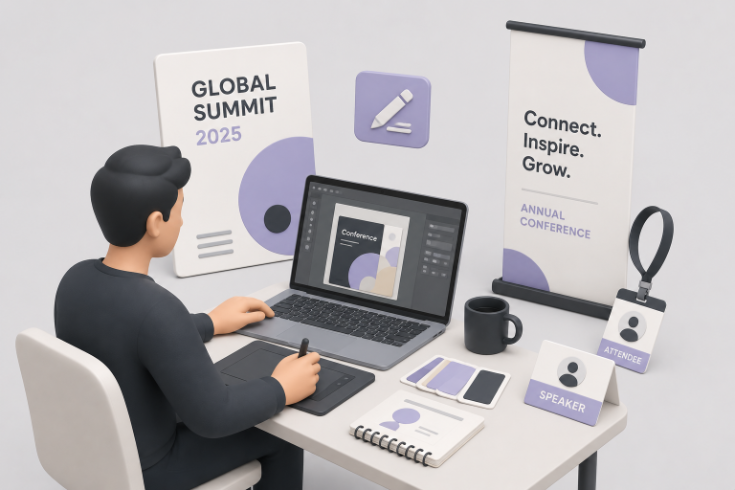
Explore some of our best designs
Get inspired by a curated selection of ManyPixels work. Download the portfolio to see what our team can create.